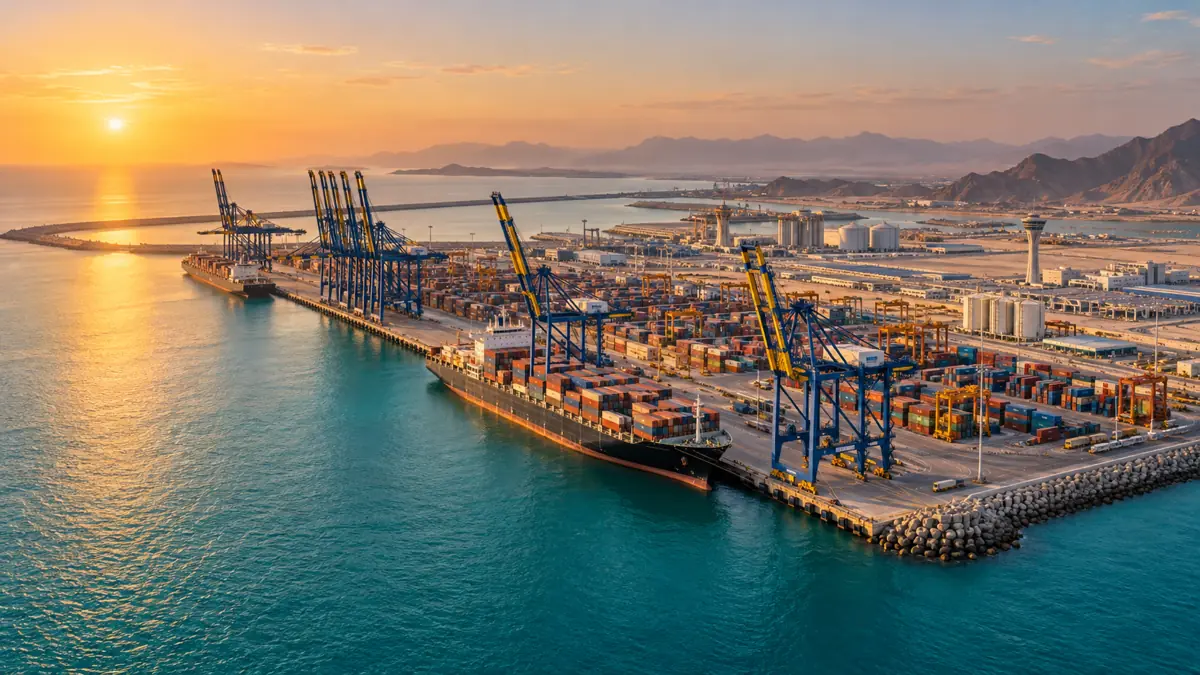
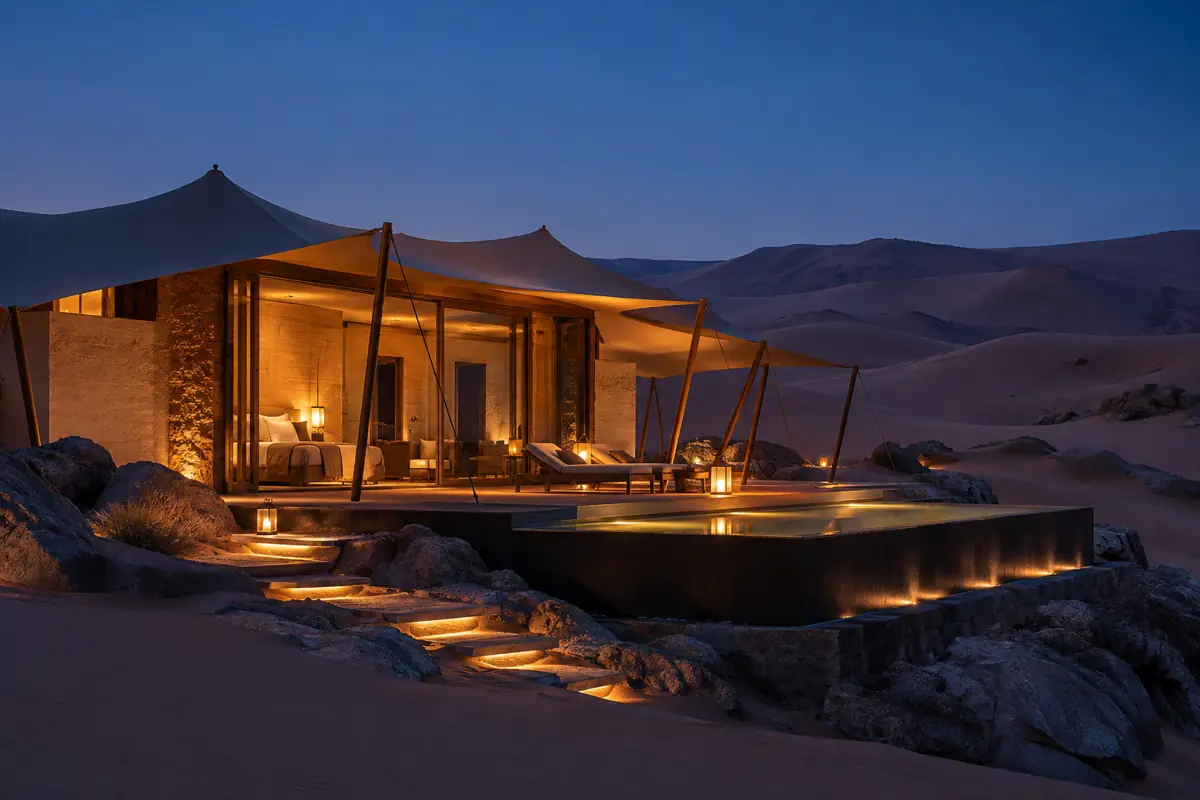
Oman offers a range of tourism assets rarely found together in one place: mountains and wadis, deserts and dunes, long coastlines, traditional villages and old quarters, and a living cultural heritage. This diversity opens opportunities for investors in heritage lodges, desert and mountain camps, and specialised tourism experiences, but it does not make every tourism idea automatically viable.
A tourism project is affected by seasonality, requires investment in the experience and its details, and depends on digital reputation more than many other sectors. In this guide we look at how to build a realistic feasibility study for these three formats.
What makes tourism projects different in feasibility studies
A tourism project differs from a conventional commercial venture in fundamental ways that must be reflected in the study:
- Seasonality: demand is concentrated in certain months and may fall markedly in others, depending on the nature of the site and the type of visitor.
- The product is the experience: guests are not just buying a room or a tent; they are buying a feeling, a story and a place.
- Reliance on booking channels: online booking platforms and tour operators may account for a significant share of sales, and their commissions must be factored in.
- Sensitivity to location: ease of access, infrastructure, proximity to attractions, and services.
- Licences and requirements: tourism projects deal with multiple authorities, chief among them the Ministry of Heritage and Tourism, and the requirements in force at the time of implementation should be checked directly with the competent authorities.
Format one: heritage lodges
A heritage lodge involves restoring a traditional house or group of houses and converting it into accommodation that preserves its architectural and cultural character.
What the study should focus on
- Restoration cost: heritage buildings hold structural surprises, so the study should rely on an on-site technical assessment and add an appropriate contingency reserve.
- Number of rooms: usually limited by the nature of the building, which makes price and occupancy rate decisive factors.
- Complementary services: breakfast and traditional meals, tours of the old quarter, and cultural activities raise average spend per guest.
- Relationship with the local community: employing local people and working with artisans strengthen the authenticity and sustainability of the experience.
Format two: desert and mountain camps
Camps range from basic to luxury, and the gap between them in cost, pricing and target segment is wide.
What the study should focus on
- Defining the category clearly: a budget camp aiming for volume, or a luxury camp targeting a limited segment at higher prices.
- Infrastructure: water, electricity, sewerage and access roads, items that can make up a large share of the cost at remote sites.
- Sharp seasonality: demand at some sites falls steeply in the hot months, and this must show up in the monthly cash flows.
- Environmental sustainability: eco-friendly solutions such as solar power and waste management have become both a draw for guests and a responsibility.
Format three: tourism experiences
These include nature tours, boat trips, mountain hikes, cooking experiences, traditional crafts, photography and more.
What the study should focus on
- Lower capital and a faster launch compared with accommodation projects.
- Partnerships: with hotels, lodges and tour operators to secure a steady flow of customers.
- Safety and insurance: especially for marine and mountain activities, items where there is no room for compromise.
- Per-participant pricing, with a minimum group size set at the level that covers cost.
A quick comparison of the three formats
| Item | Heritage lodge | Camp | Tourism experience |
|---|---|---|---|
| Initial investment | Relatively high due to restoration | Medium to high depending on category | Low to medium |
| Impact of seasonality | Medium | Often high | Varies by activity |
| Main revenue driver | Occupancy and nightly rate | Occupancy and packages | Number of participants and price |
| Key risks | Restoration surprises | Infrastructure and weather | Safety and reliance on partners |
A hypothetical example: the impact of seasonality on revenue
A 10-room heritage lodge with an average nightly rate of OMR 45.
- If we assume 75% occupancy year-round, annual room revenue ≈ 10 × 365 × 0.75 × 45 ≈ OMR 123,000 approximately.
- But if the reality is 75% occupancy for six months and 30% for the other six, average annual occupancy drops to around 52%, and revenue ≈ OMR 86,000 approximately.
The difference is close to OMR 37,000 a year, enough to turn a profitable project into a struggling one. That is why projections must be built monthly rather than annually, and tested through sensitivity and scenario analysis. All figures are hypothetical, for illustration only, and do not reflect actual market rates or occupancy levels.
How should the study address seasonality?
It is not enough for the study to acknowledge a weak season; it should propose solutions that are tested financially. Examples include:
- Tiered pricing between peak and low seasons, with packages for longer stays.
- Targeting alternative segments in the weak season, such as residents of Oman, visitors from regions with a different climate, or private events and corporate workshops.
- Cost flexibility through seasonal employment contracts for part of the team, and scheduling major maintenance work during the quiet months.
- A planned closure for some months if it proves cheaper than operating at low occupancy, a decision that must be settled by the numbers, not by impressions.
The cost structure the study must not overlook
Alongside construction and fit-out costs, a good tourism study includes operating items specific to the sector: booking platform commissions, hospitality and consumables costs, insurance for assets and guests, digital marketing and professional photography, and routine maintenance of furniture, air conditioning and tents affected by heat, humidity and sand, plus a reserve for refreshing fixtures and equipment every few years to maintain the standard of the experience and the reviews.
Where does tourism market data come from?
Estimating tourism demand requires a mix of sources:
- Data published by the National Centre for Statistics and Information and the Ministry of Heritage and Tourism on visitor numbers and hotel occupancy.
- Analysis of competitors on booking platforms: prices, reviews, and room availability across different seasons.
- Interviews with tour operators and tour guides.
- Study of the target segments: domestic tourists, residents, visitors from GCC countries, or tourists from distant markets, each with their own seasons and preferences.
For a deeper look at estimation methodology, see our article on estimating demand in the Omani market.
The picture is not complete without analysing competitors' digital reputation. Reading reviews on booking platforms reveals what guests value and what they complain about, from cleanliness and food quality to difficult access and weak internet connectivity. These observations are valuable input for designing an experience that avoids the weaknesses of the existing market and justifies a higher price by offering clearer value.
If the project will rely on external financing, the application needs to present seasonality transparently and propose a financing installment schedule that aligns with it, as we explain in detail in our article What does a financier look for in a feasibility study?.
Common mistakes in tourism project studies
- Applying peak-season occupancy to the whole year.
- Ignoring booking platform and tour operator commissions when calculating net revenue.
- Underestimating infrastructure costs at remote sites.
- Failing to budget for digital marketing and reputation and review management.
- Ignoring routine maintenance costs imposed by climatic conditions.
- Starting construction before verifying current licensing requirements.
- Overlooking the cost of training the team in hospitality standards, which is what generates positive reviews and repeat visits.
Conclusion
Tourism projects in Oman are a genuine opportunity, but their success depends on understanding seasonality, defining the segment precisely, costing infrastructure and licensing realistically, and building an experience worth the price. A good feasibility study builds revenue month by month, tests conservative scenarios, and determines whether a lodge, a camp or an experience is the best fit for your site and your resources. If you are considering a tourism project and want to start on a clear footing, we would be glad to hear from you: request your study.
Frequently asked questions
What is the single most important number in a feasibility study for a tourism accommodation project?
The expected year-round occupancy rate, because it determines revenue and is directly affected by seasonality, location and marketing. The common mistake is to build the study on peak-season occupancy and apply it to the entire year.
Do I need a licence before preparing the study?
The reverse is preferable: start with the study to establish the idea's feasibility and requirements, then contact the competent authorities, such as the Ministry of Heritage and Tourism, to learn the current licensing requirements, and incorporate those requirements and their costs into the study before implementation.
Are tourism experiences viable without an accommodation project?
They can be. They usually require less capital and can launch faster, but their margins depend on partnerships with tour operators and hotels and on the quality of digital marketing. They need a careful study of demand, pricing and safety.